Find rotating amber solar warning light for Road Construction, Railway, and Parking
Source 30 rotating amber solar warning lights from verified suppliers. Compare specifications including LED quantity, battery capacity, and working modes for road construction, railway, and parking applications.
Key considerations
Products List




Comprehensive Sourcing Guide
Strategic Sourcing Guide for Rotating Amber Solar Warning Lights
Understanding Core Technical Specifications
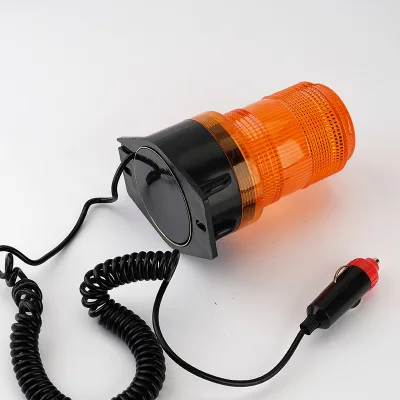
When sourcing a rotating amber solar warning light, buyers must first establish a clear understanding of the technical baseline required for their specific operational environment. The core keyword implies a device that combines a specific light color (amber), a dynamic visual signal (rotating), and an independent power source (solar). Based on observed market data, these units typically utilize Light Emitting Diodes (LEDs) as the primary light source, which offers superior energy efficiency and longevity compared to traditional incandescent bulbs. The housing material is a critical determinant of durability, with observed products utilizing Polycarbonate (PC) or a combination of Polypropylene (PP) and PC. These non-metallic shells are selected for their resistance to impact, corrosion, and harsh weather conditions often encountered in road construction or remote railway environments.
The power architecture is equally vital. Solar warning lights generally integrate a small solar panel, with observed specifications ranging from 0.5W to 0.8W, paired with a 5V output. This panel charges an internal Lithium Battery, typically rated at 3.7V with capacities around 2300mAh to 3000mAh. The battery capacity directly influences the device's ability to operate through extended periods of low sunlight. Buyers should verify the specific charging method capabilities; some units support both DC charging and solar charging, providing redundancy if solar exposure is insufficient. The working modes observed in the market include rotating flashing, strobe flashing, regular flashing, and synchronous flashing. The "rotating" aspect is a specific mechanical or optical mode designed to create a sweeping visual effect that is highly visible from a distance, making it ideal for high-traffic warning scenarios.
Compliance and Certification Verification
In the B2B procurement of safety-critical lighting equipment, verifying compliance with international standards is non-negotiable. While specific certification status varies by manufacturer, the market data indicates that reputable suppliers often provide products certified under CE, RoHS, FCC, and TUV standards. These certifications ensure that the electrical components meet European safety directives, the materials are free from hazardous substances, and the radio frequency emissions are within acceptable limits. Buyers must explicitly request certification documentation for the specific model they intend to purchase, rather than assuming a blanket certification for the entire product line.
Beyond certifications, the physical standards of the product must be scrutinized. Dimensions vary significantly across the market, with observed models ranging from compact units measuring approximately 85mm in diameter to larger installations exceeding 385mm in diameter. The standard for one observed model specifies a diameter of 180mm and a height of 120mm, while another larger unit measures 385mm by 388mm. It is essential to confirm that the physical dimensions align with the intended installation site, whether it is a temporary road construction zone or a permanent railway crossing. Additionally, the ingress protection (IP) rating is a key metric for weather resistance. Observed products carry ratings such as IP65 and IP57, indicating varying degrees of dust tightness and water immersion resistance. Buyers should verify the specific IP rating required for their local climate; for instance, areas prone to heavy rainfall or flooding may require the higher IP57 rating to ensure the internal electronics remain dry.
Cost Drivers and Pricing Dynamics
The pricing of rotating amber solar warning lights is influenced by a complex interplay of factors, including material quality, battery capacity, and production volume. The observed price range in the market spans from $0.20 to $55.00 USD, a wide variance that reflects differences in build quality and feature sets. Lower-cost units may utilize basic PP housing and smaller solar panels, while premium models often feature robust PC housings, larger batteries, and advanced control methods like inductive control. The battery type and capacity are significant cost drivers; a 3000mAh Lithium Battery will inherently cost more than a 2300mAh unit, yet it offers superior operational reliability.
Minimum Order Quantity (MOQ) is another critical factor affecting the total cost of procurement. The observed MOQ range extends from 1 unit to 2000 units. For small-scale projects or trial orders, buyers can source single units, but this often results in a higher per-unit cost. Conversely, bulk purchasing at the higher end of the MOQ spectrum can significantly reduce the unit price, making it a viable strategy for large infrastructure projects. Buyers should also consider the packaging standards, as observed products use 5-layer corrugated kraft paper outer boxes or standard carton boxes. Robust packaging adds to the cost but is essential for preventing damage during international shipping, particularly given the fragile nature of solar panels and glass components.
Typical Applications and Installation Requirements
Rotating amber solar warning lights are versatile tools designed for a wide array of safety applications. The primary use cases observed include road construction, railway safety, parking management, tunnel entry points, and general road traffic control. In road construction zones, these lights serve as temporary warning signals to alert drivers to hazards, lane closures, or equipment presence. The amber color is universally recognized as a warning signal, making it ideal for temporary or cautionary scenarios. For railway applications, the lights provide critical visibility at crossings or along tracks where power lines may be unavailable.
Installation methods vary based on the specific model and application. Some units are designed for surface mounting using screws, while others may require different fixation methods depending on the substrate. The control method is another consideration; inductive control allows the light to activate automatically upon detecting motion or traffic, enhancing energy efficiency by reducing unnecessary operation. Buyers must evaluate the installation environment to determine the optimal mounting height and angle. For example, a unit with a diameter of 184mm and a height of 235mm may be suitable for a specific post height, whereas a larger 385mm unit might be better suited for a standalone pole. The working voltage is also a factor; while many solar units are self-contained, some models support external power inputs of 12V, 24V, or 220V, offering flexibility for hybrid power systems.
Supplier Evaluation and Product Comparison
Selecting the right supplier requires a rigorous evaluation process that goes beyond price comparison. Buyers should assess the supplier's ability to provide consistent product specifications, particularly regarding the LED quantity and color options. Observed models feature varying LED counts, such as 6 or 8 pieces, and offer color options including yellow, red, blue, green, and white. The ability to customize colors and patterns, such as the circle pattern observed in some listings, is a valuable differentiator for suppliers catering to specific branding or regulatory requirements.
To facilitate a clear comparison, the following table outlines key technical attributes observed across different product models in the market:
| Attribute | Model A (LTD-5288) | Model B (LB-6008) | Model C (RB-180) | Model D (LB-8000) |
|---|---|---|---|---|
| Dimensions | 15.115.18.3 CM | Dia. 180mm120mm70mm | 175mm83mm288mm | Dia. 385mm*H 388mm |
| Housing Material | PC | Non-Metallic Shell | PP | PC |
| Solar Panel | 0.5W 5.5V | Not Specified | 0.8W 5V | Not Specified |
| Battery | 3.7V 2300mAh | Not Specified | 3.2V 3000mAh | Not Specified |
| LED Qty | 8 PCS | Not Specified | Not Specified | 6 PCS |
| IP Rating | IP65 | Not Specified | IP57 | Not Specified |
| Certifications | Not Specified | CE, RoHS, FCC, TUV | Not Specified | CE |
| Working Mode | Rotating/Strobe | Not Specified | Rotary/Strobe | Flashing/Strobe |
This comparison highlights the diversity in specifications. Buyers must ensure that the selected model meets their specific needs for durability, power capacity, and visibility. For instance, if a project requires a larger footprint for higher visibility, Model D (LB-8000) with its 385mm diameter might be the preferred choice. Conversely, for compact applications where space is limited, Model A (LTD-5288) offers a smaller profile.
Quality Control and Long-Term Procurement Considerations
Quality control is paramount when sourcing solar warning lights, as these devices are often deployed in remote locations where maintenance is difficult and costly. Buyers should implement a strict quality assurance protocol that includes verifying the integrity of the solar panel, the capacity of the battery, and the waterproofing of the housing. The IP rating must be validated through testing, as water ingress can lead to rapid battery failure and LED degradation. Additionally, the working modes should be tested to ensure the rotating mechanism functions smoothly and the strobe patterns are consistent with safety regulations.
Long-term procurement considerations involve evaluating the supplier's after-sales support and warranty policies. Given the reliance on solar power, the degradation of the battery and solar panel over time is a natural occurrence. Buyers should inquire about the expected lifespan of the components and the availability of replacement parts. Customization options, such as specific color combinations or pattern requirements, should be confirmed early in the procurement process to avoid delays. Furthermore, the origin of the product, typically China for these items, should be considered in the context of shipping lead times and logistics. While the observed lead times are not explicitly defined, buyers should anticipate potential delays due to international shipping and customs clearance.
In conclusion, sourcing a rotating amber solar warning light requires a balanced approach that weighs technical specifications, compliance, cost, and supplier reliability. By carefully analyzing the observed data and verifying critical attributes such as IP ratings, battery capacity, and certifications, buyers can make informed decisions that ensure the safety and efficiency of their projects. The wide range of available options allows for tailored solutions that meet the unique demands of road construction, railway, and other critical infrastructure applications.
FAQs
What certifications are available for rotating amber solar warning lights?
Reputable models often carry CE, RoHS, FCC, and TUV certifications to ensure safety and compliance. Buyers must verify specific documentation for the chosen model rather than assuming blanket coverage across all units.
Which housing materials are commonly used for these warning lights?
Products typically utilize Polycarbonate (PC) or a combination of Polypropylene (PP) and PC for durability. These non-metallic shells provide resistance against impact, corrosion, and harsh weather conditions found in road construction.
How does the battery capacity affect the working time of the light?
Internal Lithium Batteries typically range from 2300mAh to 3000mAh, directly influencing operation during low sunlight. Higher capacity units offer superior reliability but may increase the overall procurement cost for the project.
Can these lights be customized for specific color or pattern requirements?
Customization is available for colors such as yellow, red, blue, and green, as well as patterns like circles. Suppliers can tailor these attributes to meet specific branding or regulatory needs upon request.
What is the typical price range for rotating amber solar warning lights?
Market prices span from 0.20 to 55.00 USD depending on build quality and feature sets. Lower-cost units often use basic materials, while premium models feature robust housings and larger batteries.
Which IP ratings indicate water resistance for these devices?
Observed products carry ratings such as IP65 and IP57 for dust tightness and water immersion resistance. Areas prone to heavy rainfall may require the higher IP57 rating to ensure internal electronics remain dry.